

What Is a U-Value?
When you’re investing in rooflights or roof lanterns, there’s one technical term that comes up time and time again, U-value. It’s often mentioned in specifications and building regulations, and for good reason. A product’s U-value plays a huge role in how energy efficient your space will be once the installation is complete.
But what exactly is a U-value, why does it matter so much, and how does it relate specifically to rooflights and roof lanterns? Let’s break it down clearly, so you can make the most informed decision for your next project.
What Is a U-Value?
In simple terms, U-values measure how well a material or product prevents heat from escaping. It tells you how effective your rooflight or roof lantern will be at keeping warmth inside during the winter and stopping unwanted heat from entering during the summer.
Technically speaking, the U-value measures the rate of heat transfer (in watts) through one square metre of material for every degree of temperature difference between the inside and outside. The unit of measurement is W/m²K (watts per square metre per kelvin).
The key thing to remember is: The lower the U-value, the better the insulation performance.
So, a rooflight with a U-value of 1.0 W/m²K will retain heat far better than one with a U-value of 2.5 W/m²K.
Why U-Values Matter for Rooflights and Roof Lanterns

Because rooflights and roof lanterns are installed in the roof, they’re directly exposed to the elements, from blazing sun to icy winds. As such, they’re a crucial part of your building’s thermal envelope, and their U-value can significantly impact both comfort and energy efficiency.
Here’s why U-values matter so much for these types of glazing products:
1. Energy Efficiency
The lower the U-value, the less heat escapes. This means your heating system doesn’t need to work as hard, which in turn reduces your energy bills. Over time, this can lead to substantial savings, particularly in homes with multiple rooflights or larger roof lantern installations.
2. Comfort All Year Round
A high-performing rooflight helps maintain a comfortable indoor temperature. It keeps the warmth in during the colder months while minimising overheating when the sun is at its strongest. That means fewer draughts, less condensation and a more pleasant living environment overall.
3. Building Regulation Compliance
Rooflights and roof lanterns installed in new builds or extensions must meet specific U-value requirements set out in Building Regulations Approved Document L. These regulations ensure that buildings meet modern energy-efficiency standards and don’t waste unnecessary heat. Choosing a product with a certified low U-value helps you stay compliant and ensures your project passes inspection the first time.
4. Environmental Impact
Lower U-values also contribute to a reduced carbon footprint. When your home or building uses less energy to stay warm, it releases fewer emissions. For those striving to meet sustainability targets or achieve eco-friendly building accreditations, thermally efficient roof glazing is a smart investment.
How Are U-Values Calculated?
U-values are determined by considering the thermal performance of all materials that make up a product, not just the glass itself. For rooflights and roof lanterns, this includes:
- The glazing (single, double or triple glazed)
- The spacer bar (which separates the glass panes)
- The frame material (typically aluminium or uPVC)
- The seals and gas fills (such as argon or krypton)
Each of these components contributes to the overall U-value. Manufacturers calculate and test U-values in controlled environments to ensure accuracy, and the resulting figures are verified to meet industry standards such as BS EN ISO 10077.
Typical U-Values for Rooflights and Roof Lanterns
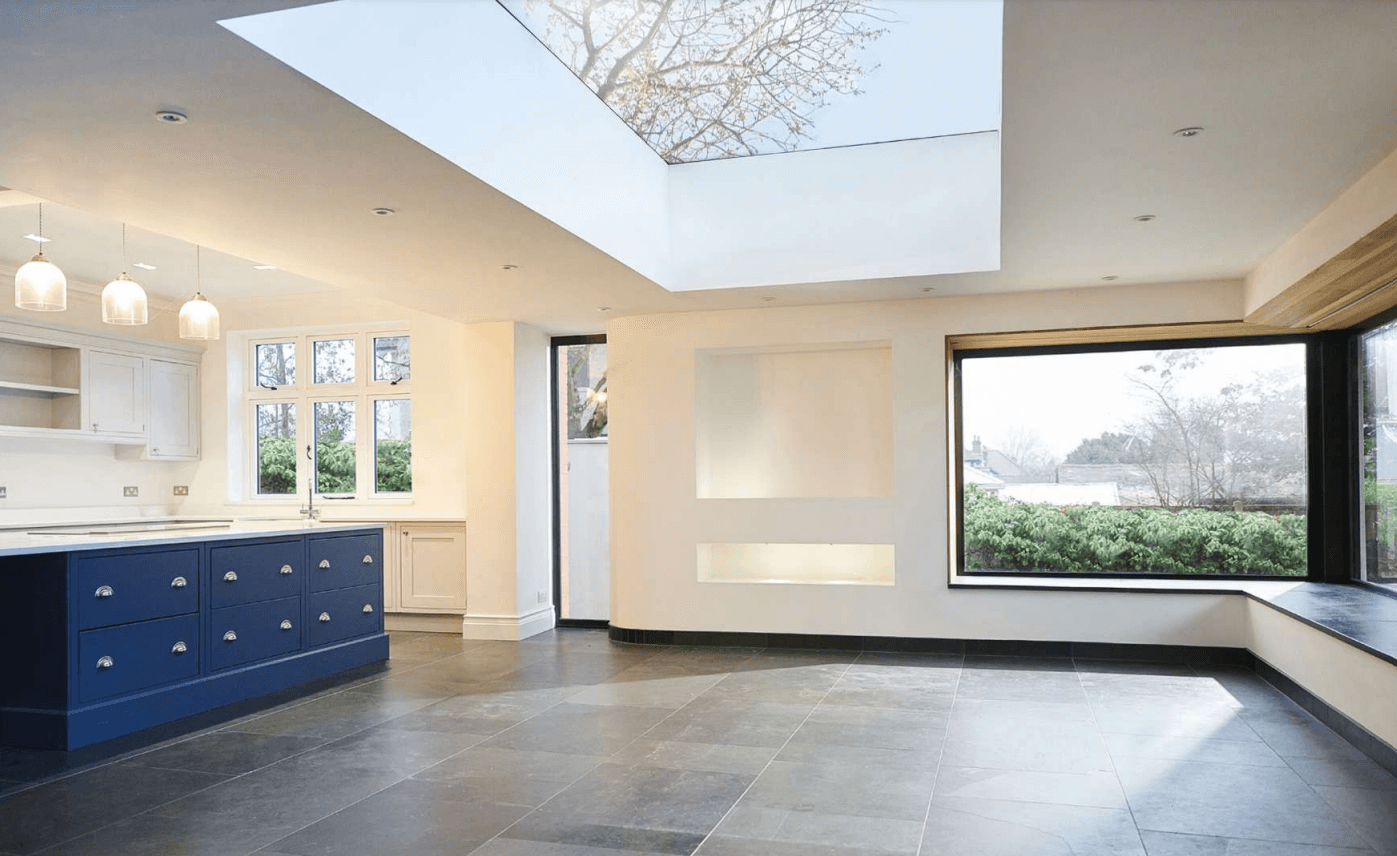
While exact U-values vary depending on the design and materials used, here’s a general guide to what you can expect:
- Single glazed rooflight: Around 5.0 – 6.0 W/m²K
- Double glazed rooflight: Around 1.4 – 2.8 W/m²K
- Triple glazed rooflight: As low as 1 – 1.2 W/m²K
It’s worth noting that even within double and triple glazing, there are variations. For example, using low-emissivity (Low-E) glass, argon-filled cavities and warm edge spacers can all help achieve better thermal performance.
So, when comparing products, always check the overall unit U-value, not just the glass centre value. The overall figure accounts for the entire construction of the rooflight or lantern, which gives a much more realistic measure of real-world performance.
The Role of U-Values in Roof Lanterns vs Rooflights
Although both products let natural light flood into a space, their designs differ, and that means their U-values can differ too.
- Flat rooflights tend to have slightly lower U-values because their minimalistic, flush design reduces heat loss through joints and framing.
- Roof lanterns, on the other hand, have more glazing area and framing due to their multi-pane, pitched structure. However, high-quality lanterns are engineered to offset this through advanced thermal breaks, insulated frames, and high-performance glazing.
Modern designs make it possible for both types to achieve exceptionally low U-values, ensuring you don’t have to compromise on aesthetics to achieve efficiency.
Why U-Value Isn’t the Only Consideration
While U-value is a vital measure of performance, it’s not the only one to consider. To get the most from your rooflight or roof lantern, you should also think about:
- Solar gain (g-value): How much heat from the sun passes through the glass. This affects how warm your space feels in summer.
- Light transmission: How much natural light enters your room, key for creating bright, open spaces.
- Air tightness: Ensures there are no unwanted draughts or leaks around the frame.
- Condensation resistance: A sign of how well the product manages temperature differences between inside and outside.
A well-designed rooflight balances all these factors, delivering exceptional thermal performance without sacrificing light or style.
Final Thoughts
So, what is a U-value? In short, it’s a measure of how well your rooflight or roof lantern keeps your space warm, efficient, and compliant with building standards. The lower the number, the better the insulation, and the more you’ll benefit from reduced energy costs, improved comfort, and sustainable performance.
When choosing your next rooflight or lantern, don’t just look at how it looks, check its specification too. Investing in a product with a low U-value ensures your space stays comfortable year-round while supporting a more energy-efficient home.
At UK Rooflights we offer a wide range of rooflights and roof lanterns with U-values as low as 1 W/m²K to fit your homes specific needs. Want to find out more? Speak to our team on info@ukrooflights.co.uk today!


